
The Mekong River is one of the most important and majestic waterways in Asia. It starts in Tibet and traverses six countries before emptying into the South China Sea. This article provides a comprehensive overview of the Mekong River, exploring its geography, history, ecology, and cultural significance.
Có thể bạn quan tâm: Đối Tượng Khách Hàng Của Vietnam Airlines Là Ai? Phân Tích Chi Tiết
How the Mekong River Starts in Tibet and Shapes a Continent
The Mekong River originates on the Tibetan Plateau, specifically from the Lasagongma Springs in the Sanjiangyuan National Nature Reserve in Qinghai Province, China. This high-altitude source, often referred to as the “Roof of the World,” is a region of extreme cold and rugged terrain. The river begins as a series of small streams that converge to form the mighty waterway that eventually flows through diverse landscapes and climates.
The Mekong River starts in Tibet at an elevation of approximately 5,200 meters above sea level. From its glacial origins, it flows southward, carving its path through some of the most dramatic landscapes on Earth. The upper Mekong, known as the Lancang River in China, flows through deep gorges and mountainous regions before reaching the lower Mekong basin.
Key points about the Mekong River’s origin:
- Source location: Lasagongma Springs, Sanjiangyuan National Nature Reserve, Qinghai, China
- Elevation: Approximately 5,200 meters above sea level
- Initial name: Lancang River (in China)
- River length: Approximately 4,900 kilometers (3,050 miles)
The Mekong River starts in Tibet as part of a larger hydrological system that includes other major Asian rivers like the Yangtze and Yellow Rivers. This region is crucial for maintaining the water supply for millions of people downstream and serves as an important ecological zone.
The Journey of Water: From Tibetan Glaciers to the South China Sea
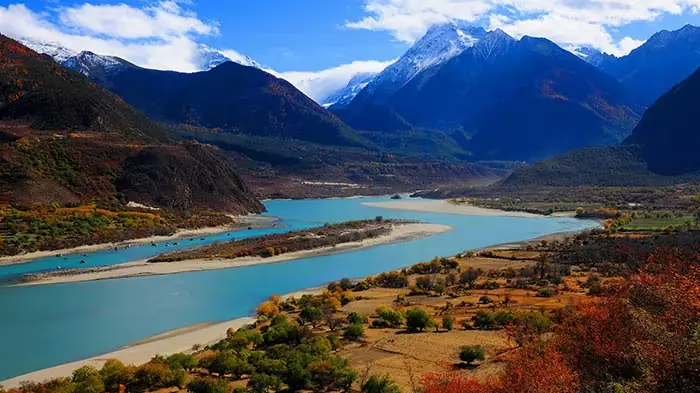
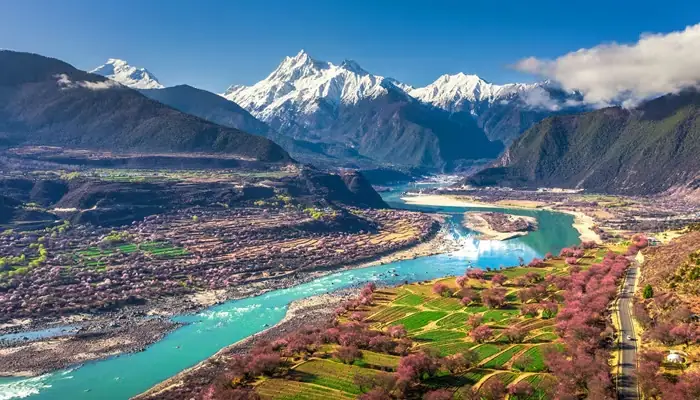
The Mekong River starts in Tibet and begins its remarkable journey through some of Asia’s most diverse landscapes. After leaving its glacial origins on the Tibetan Plateau, the river descends through mountainous regions, creating deep valleys and gorges that are among the most spectacular in the world.
As the Mekong River starts in Tibet, it flows through the Three Parallel Rivers region of Yunnan Province in China. This UNESCO World Heritage Site features the Mekong, Yangtze, and Salween rivers flowing roughly parallel to each other through deep canyons, separated by high mountain ridges. The river’s path through this region is characterized by dramatic elevation changes and powerful waterfalls.
The Mekong River starts in Tibet and then flows through several countries:
- China: Where it’s known as the Lancang River
- Myanmar: Briefly touches the country’s eastern border
- Laos: Forms much of the border with Thailand
- Thailand: The river serves as a natural boundary
- Cambodia: Where it becomes the lifeblood of the country
- Vietnam: Where it forms the vast Mekong Delta before emptying into the South China Sea
Each section of the river’s journey presents different challenges and opportunities for the communities that depend on it. The Mekong River starts in Tibet as a relatively small stream but grows in power and volume as it collects water from numerous tributaries along its course.
Six Countries, One River: The Mekong’s International Journey
The Mekong River starts in Tibet and flows through six countries, making it one of the most internationally significant rivers in the world. This transboundary nature creates both opportunities for cooperation and challenges in water management and resource allocation.
China (Tibet Autonomous Region): The Mekong River starts in Tibet and flows through the upper reaches of the river system. China has constructed several large dams on the upper Mekong, which has raised concerns among downstream countries about water flow and sediment transport.
Myanmar: The river briefly forms part of Myanmar’s eastern border with Laos. While Myanmar’s involvement in Mekong River management is limited compared to other countries, it remains an important stakeholder in regional cooperation efforts.
Có thể bạn quan tâm: Tin Nóng Đồng Đăng Lạng Sơn: Tổng Hợp Các Sự Kiện Mới Nhất
Laos: The Mekong River forms much of Laos’s western border with Thailand. Laos has become increasingly active in Mekong River development, particularly in hydropower projects. The country aims to become the “battery of Southeast Asia” through its numerous dam projects on the Mekong and its tributaries.
Thailand: The river serves as a natural boundary between Thailand and Laos for much of its length. Thailand has developed extensive irrigation systems and water management infrastructure along its Mekong River sections.
Cambodia: The Mekong River is crucial to Cambodia’s economy and food security. The Tonle Sap Lake, connected to the Mekong, is one of the most productive freshwater fisheries in the world. The river’s annual flooding cycle is essential for Cambodia’s rice production.
Vietnam: The Mekong River starts in Tibet and finally reaches its delta in southern Vietnam. The Mekong Delta is Vietnam’s “rice bowl,” producing a significant portion of the country’s rice exports. The delta is also home to millions of people who depend on the river for their livelihoods.
The cooperation between these six countries is facilitated by the Mekong River Commission (MRC), established in 1995 by Cambodia, Laos, Thailand, and Vietnam. While China and Myanmar are not full members, they participate as dialogue partners.
Why the Mekong River Matters: Economic and Ecological Importance
The Mekong River starts in Tibet and flows through some of the most densely populated and economically important regions in Asia. Its economic and ecological significance cannot be overstated, as it supports the livelihoods of over 60 million people directly and potentially hundreds of millions more indirectly.
Economic Importance:
- Agriculture: The Mekong River supports one of the world’s most productive agricultural regions. The annual flooding cycle deposits nutrient-rich sediment that fertilizes farmland, particularly in the Mekong Delta.
- Fisheries: The river system supports one of the largest freshwater fisheries in the world, providing protein for millions of people and generating significant income through commercial fishing.
- Transportation: The Mekong River serves as an important transportation route, particularly in areas where road infrastructure is limited.
- Tourism: The river attracts millions of tourists each year, contributing significantly to local economies.
Ecological Importance:
- Biodiversity: The Mekong River basin is home to an incredible variety of species, including the critically endangered Mekong giant catfish, Irrawaddy dolphins, and numerous other endemic species.
- Wetlands: The river system supports extensive wetlands that provide habitat for migratory birds and other wildlife.
- Water filtration: The river’s natural processes help filter and purify water for downstream users.
- Climate regulation: The extensive forests and wetlands in the Mekong basin play a role in carbon sequestration and climate regulation.
The Mekong River starts in Tibet and its health is crucial not just for the immediate region but for global biodiversity and food security. The river’s ecosystem services are estimated to be worth billions of dollars annually.
Challenges Facing the Mekong River: Dams, Climate Change, and Pollution
The Mekong River starts in Tibet and faces numerous challenges that threaten its ecological health and the livelihoods of those who depend on it. These challenges are complex and interconnected, requiring coordinated action from all countries in the basin.
Hydropower Dams:
One of the most significant threats to the Mekong River is the proliferation of hydropower dams, particularly on the upper reaches in China and the lower Mekong in Laos. While these dams generate electricity and revenue, they also disrupt the river’s natural flow patterns, block fish migration routes, and trap sediment that is essential for downstream agriculture and delta maintenance.
Climate Change:
The Mekong River starts in Tibet in a region that is particularly vulnerable to climate change. Glacial melt, changes in precipitation patterns, and rising temperatures are affecting the river’s flow and water quality. These changes have cascading effects on agriculture, fisheries, and freshwater availability.
Có thể bạn quan tâm: Dự Báo Thời Tiết Đà Nẵng Dịp Tết Nguyên Đán 2026: Mưa Phùn Rải Rác, Nhiệt Độ Ổn Định
Pollution:
Industrial development, agricultural runoff, and inadequate waste management systems contribute to pollution in the Mekong River. This pollution affects water quality, harms aquatic life, and poses health risks to people who rely on the river for drinking water and food.
Sand Mining:
Excessive sand mining in the riverbed for construction purposes is causing erosion, changing the river’s course, and destroying fish habitats. This practice is particularly problematic in the Mekong Delta region.
Overfishing:
The Mekong River supports one of the world’s largest freshwater fisheries, but overfishing is threatening fish populations and the long-term sustainability of this vital resource.
Addressing these challenges requires international cooperation, sustainable development practices, and investment in alternative energy sources that don’t harm the river ecosystem.
The Mekong River’s Unique Ecosystem and Biodiversity
The Mekong River starts in Tibet and flows through one of the most biodiverse regions on Earth. The river system supports an incredible variety of plant and animal species, many of which are found nowhere else in the world.
Aquatic Life:
The Mekong River is home to over 1,100 species of fish, making it one of the most biodiverse rivers globally. Some of the most notable species include:
- Mekong Giant Catfish: One of the largest freshwater fish in the world, reaching lengths of up to 3 meters
- Irrawaddy Dolphin: A rare freshwater dolphin found in parts of the Mekong
- Giant Mekong Barb: A large fish species that is important for both commercial and subsistence fishing
- Pangasius Catfish: A commercially important species that supports significant fisheries
Terrestrial Ecosystems:
The Mekong River starts in Tibet and flows through diverse terrestrial ecosystems, including:
- Alpine meadows in the Tibetan Plateau
- Temperate forests in the mountainous regions
- Tropical rainforests in the lower basin
- Wetlands and floodplains that support rich biodiversity
Plant Life:
The river basin supports over 20,000 plant species, including numerous endemic species. The vegetation plays a crucial role in stabilizing riverbanks, filtering water, and providing habitat for wildlife.
Conservation Efforts:
Recognizing the importance of the Mekong River’s biodiversity, various conservation initiatives have been established, including protected areas, community-based conservation projects, and international cooperation agreements. However, these efforts face challenges from development pressures and limited resources.
The Mekong River starts in Tibet and its biodiversity is not just an ecological treasure but also a vital resource for the millions of people who depend on the river for food, medicine, and livelihoods.
Cultural Significance: How the Mekong River Shapes Lives and Traditions
The Mekong River starts in Tibet and has played a central role in shaping the cultures, traditions, and daily lives of the people living along its banks for thousands of years. The river is more than just a water source; it’s a lifeline that has influenced everything from agriculture to religion, from trade to art.
Có thể bạn quan tâm: Thuyết Minh Danh Lam Thắng Cảnh Cố Đô Huế
Spiritual and Religious Significance:
In many communities along the Mekong River, the waterway holds deep spiritual significance. In Laos and Cambodia, for example, the river is often associated with Buddhist traditions and local animist beliefs. Many communities hold ceremonies to honor the river spirits and ensure good harvests and safe passage.
Agricultural Traditions:
The Mekong River starts in Tibet and flows through regions where traditional agricultural practices have been developed over centuries to work in harmony with the river’s natural cycles. The annual flooding, for instance, is not just a natural phenomenon but a crucial part of the agricultural calendar that determines planting and harvesting times.
Fishing Culture:
Fishing along the Mekong River is not just an economic activity but a cultural tradition passed down through generations. Traditional fishing methods, boat-building techniques, and fish processing methods are integral parts of the cultural heritage of river communities.
Trade and Transportation:
Historically, the Mekong River has served as a vital trade route, connecting communities and facilitating the exchange of goods, ideas, and cultures. Even today, in many remote areas, the river remains the primary means of transportation and communication.
Art and Literature:
The Mekong River starts in Tibet and has inspired countless works of art, literature, and music throughout the region. From traditional boat songs to modern literature, the river continues to be a powerful symbol and source of inspiration.
Community Life:
Riverside communities along the Mekong River have developed unique social structures and community practices centered around the river. From floating markets to riverside festivals, the river shapes the rhythm of daily life and community interactions.
The cultural significance of the Mekong River underscores why protecting this vital waterway is not just an environmental or economic issue but also a matter of preserving cultural heritage and traditional knowledge.
The Future of the Mekong River: Balancing Development and Conservation
The Mekong River starts in Tibet and faces a critical juncture where the decisions made today will determine its health and viability for future generations. Balancing economic development with environmental conservation is one of the most pressing challenges facing the countries in the Mekong basin.
Sustainable Development Approaches:
Finding sustainable development models that support economic growth while protecting the river’s ecosystem is crucial. This includes:
- Renewable energy alternatives to large-scale hydropower projects
- Sustainable agriculture practices that work with, rather than against, the river’s natural cycles
- Eco-tourism development that generates income while preserving natural and cultural resources
- Community-based resource management that empowers local communities to protect their livelihoods
Regional Cooperation:
The Mekong River starts in Tibet and flows through six countries, making regional cooperation essential. Strengthening the Mekong River Commission and enhancing dialogue between all stakeholders, including China, is crucial for developing coordinated management strategies.
Climate Change Adaptation:
As the Mekong River faces increasing pressure from climate change, developing adaptation strategies is critical. This includes:
- Improved water management systems that can respond to changing flow patterns
- Flood and drought preparedness measures
- Ecosystem restoration projects to enhance the river’s resilience
- Research and monitoring to better understand climate impacts
Technology and Innovation:
The Mekong River starts in Tibet and technological solutions can play an important role in its protection. This includes:
- Satellite monitoring to track changes in the river system
- Advanced water treatment technologies to reduce pollution
- Smart agriculture systems that optimize water use
- Data sharing platforms to improve regional cooperation
Community Engagement:
Protecting the Mekong River requires the active participation of the millions of people who depend on it. This includes:
- Education and awareness programs to promote sustainable practices
- Support for traditional knowledge and practices that have proven sustainable over centuries
- Empowerment of local communities to participate in decision-making processes
The Mekong River starts in Tibet and its future depends on our ability to recognize its immense value and take collective action to protect it. The choices we make today will determine whether this vital waterway continues to support life and livelihoods for generations to come.
The Mekong River starts in Tibet and flows through some of the most diverse and dynamic landscapes in Asia. Its journey from the high plateaus of Tibet to the fertile deltas of Vietnam represents one of the most remarkable natural phenomena in the world. Protecting this vital waterway requires international cooperation, sustainable development practices, and a deep respect for the natural systems that have supported human life for thousands of years.